
 Back to the home page
We've learned that TNF is not the constant. Communities are. Our role is to ensure that, when we step back, hope, opportunity, and the tools to sustain them remain
Seven years ago, the Trevor Noah Foundation began with one school and a straightforward belief: education is the most powerful lever for change in South Africa. That belief hasn't changed. What has fundamentally changed in 2025 is how we act on it.
From Implementer to Enabler
This year marked a turning point. We did not simply deliver more programmes. We deepened our role: from sole operator to systems strengthener. We are transitioning from an institution that co-creates solutions with communities to one that enables them to lead, own, and sustain change.
The Khulani Nathi Innovation Fund (KNIF)
Announced by Trevor Noah at the Skoll World Forum in Oxford, KNIF is not merely a new funding mechanism; it is a declaration of what we believe about change. We believe the people closest to South Africa's education challenges are best placed to solve them. Trust is not a risk to be managed, but a condition for impact.
 Unpack the numbers
million
Co-founded by Microsoft over three years

capital
Unrestricted funding to foster true ownership over compliance

Concept notes
Deep response showcasing active community ingenuity
Average matric pass rates achieved through 6 years of sustained partnership at our three partner schools.
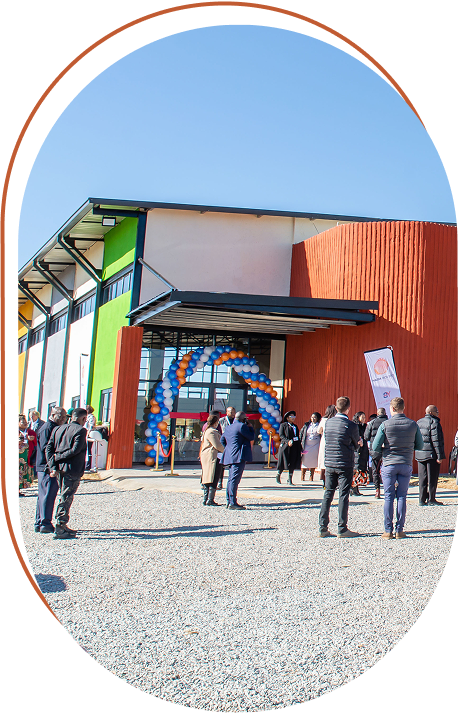
300 seater community hall space built entirely by trained local youth at Eqinisweni Secondary.
Education Changemakers alumni network expand to spanning over 240 leaders across 28 countries on the the continent.
Expanding Horizons
Self-Help Groups (SHGs)
Embedding SHG principles across Khulani schools, capacitating community members to lead independently so learning conditions outlast any single funder.
AI & Digital Skills
Deepening our Microsoft partnership to position schools and KNIF grantees directly at the intersection of technological access and equity.
Deepening Systems Influence
Working alongside provincial government, co-funders, and peer organisations to shape the broader conditions in which good education work can thrive.
Looking ahead
We are learning that the most important question is not “Can we trust them?” but “How can we support them?” We are not chasing growth for its own sake. That reorientation, from control to partnership, from funder as gatekeeper to funder as catalyst, is the thread running through everything we did in 2025.
We are deepening systems influence, working with provincial government, co-funders, and peer organisations to shape the conditions in which good education work can thrive across South Africa. By strengthening our ecosystem partnerships and making visible the collective value generated not just by our programmes but by the network of innovators, educators, and communities we are connected to.
We are building the evidence base that makes collective value legible to partners, funders, and to the field.
The work is long. The problems are deep. But so is the belief shared by every educator, youth leader, school principal, and community member who has walked this road with us — that education, done with intention and done with trust, can change what is possible.
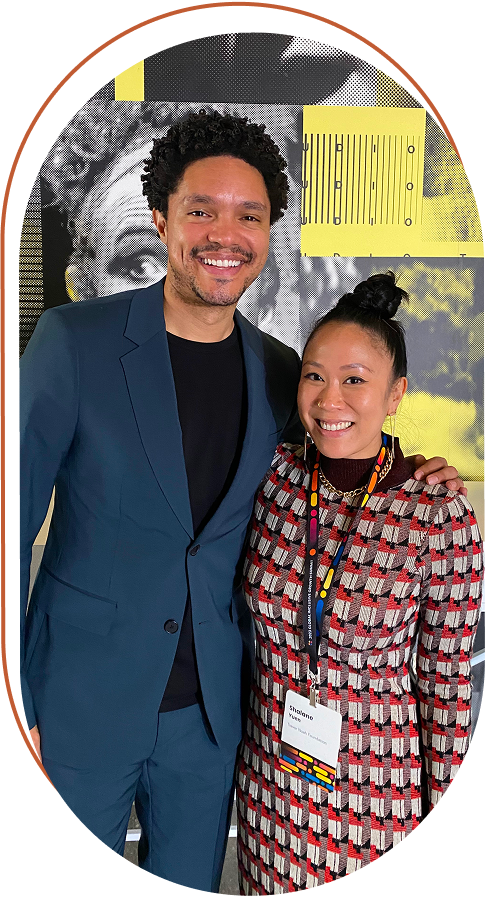
 Trevor Noah
 Shalane Yuen